
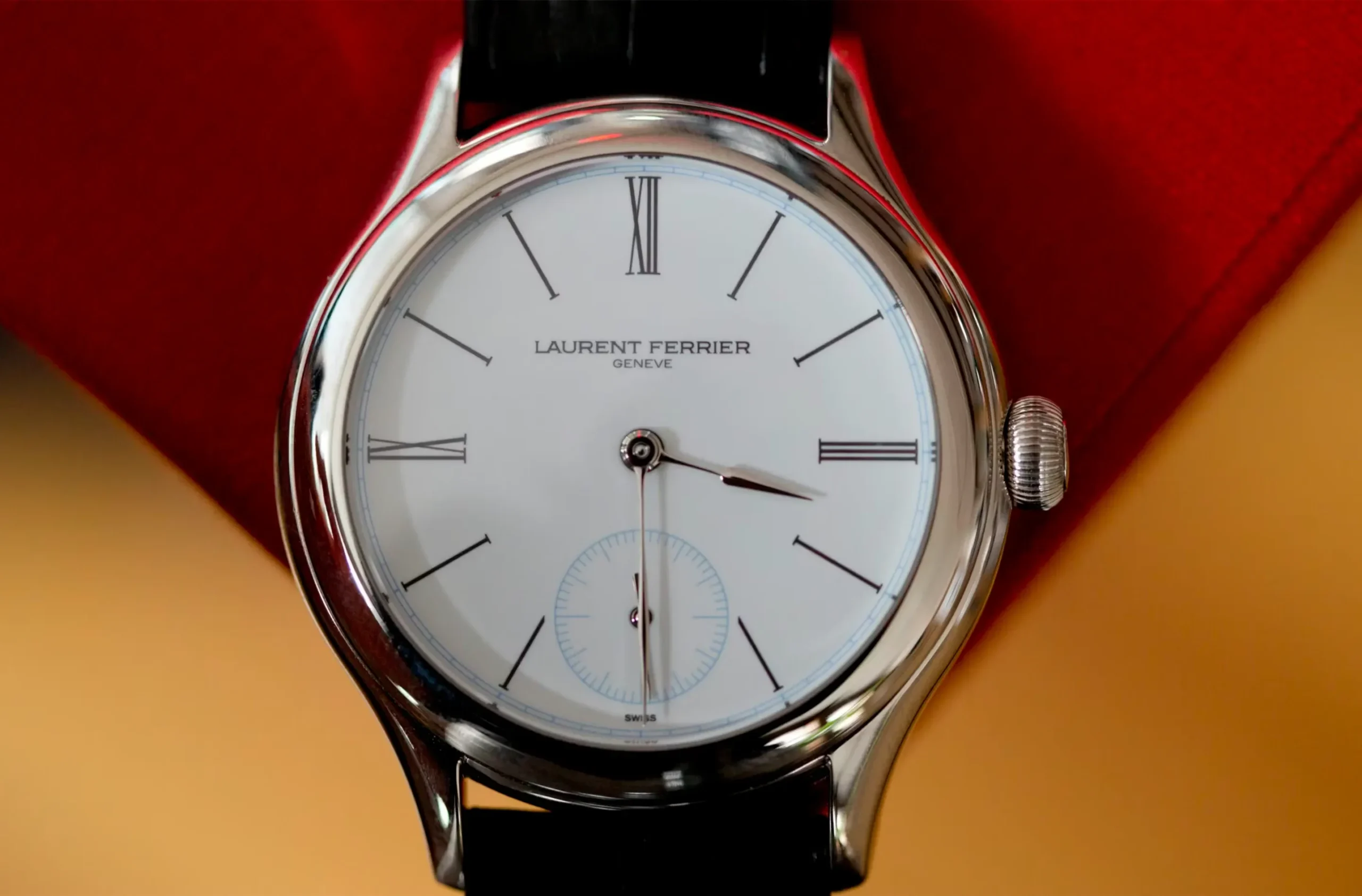
Minimalism in watches is deceptive.
To the untrained eye, a watch with an empty dial, sparse typography, or just two hands might seem like a “simple” object. But any collector who has peeked beneath the surface of horology knows that minimalism is rarely simple.
More often than not, those clean lines and uncluttered spaces are the product of agonizing restraint, the kind of obsessive discipline that takes exponentially more effort than just loading a dial with features.
We tend to equate complexity with visible evidence: open-worked dials, tourbillon cages, perpetual calendars bristling with subdials. Those watches demand recognition, and they get it.
But the true magician’s trick is different.
A minimalist piece whispers, lets the dial breathe, and yet hides mechanical mastery in places you’ll never see unless you open the caseback. Minimalist watchmaking is not absence, it’s curation, and curation requires vision, courage, and, ironically, maximum complexity.
The discipline of less is more
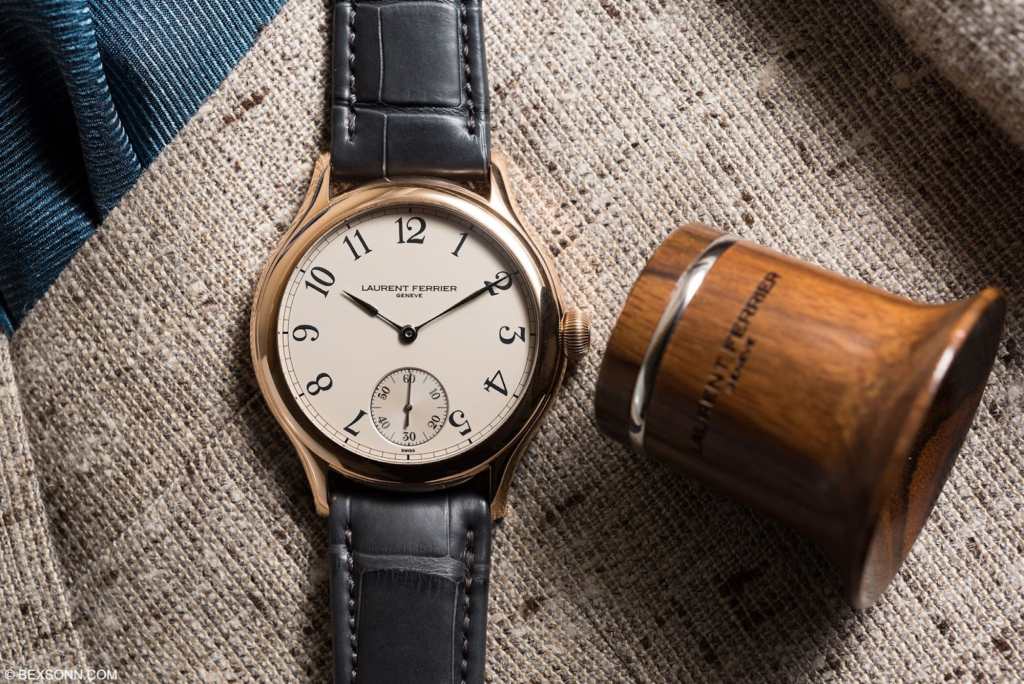
Consider the visual austerity of a watch like the Laurent Ferrier Galet Micro-Rotor.
On the wrist, it seems almost too polite, the dial uncluttered, the typography restrained to the point of invisibility. But flip it over and you find one of the most technically advanced automatic winding systems ever built, a micro-rotor with a pawl-based natural escapement that harks back to Breguet.
That’s the paradox of minimalism in watchmaking: what looks empty has often been filled with sleepless nights of engineering.
Why is this so difficult?
Because every mark, every line, every numeral on a dial is a decision.
To strip them away while still achieving balance, legibility, and personality requires more artistry than adding them.
This is why Bauhaus-inspired pieces from brands like Nomos are so compelling. They live in the thin space between sterile and soulful, using the least possible ornamentation to achieve the maximum possible personality. And the mechanics backing them up are rarely basic.
Nomos movements, for example, often boast in-house calibers with proprietary escapements, a detail you’d never guess from a quick glance at the minimalist Tangente or Orion.
Minimalism demands honesty from the watchmaker. With no decorative subdials or ornate guilloché to distract the eye, the proportions must be immaculate. The finishing must be flawless. Any imbalance becomes glaringly obvious. That is why minimalism is so unforgiving, both for designers and for the movements inside. You cannot hide behind the noise of complexity. To strip down is to expose. To expose is to reveal mastery or mediocrity.
And yet, for those who know, that blankness becomes magnetic.
A Vacheron Constantin Patrimony with a simple two-hand layout tells a far richer story than most watches with a dozen complications. The balance of its indices, the thickness of its hands, the subtle convexity of its dial… these are details that collectors obsess over.
The simplicity is an illusion. The complexity lies in making the illusion seamless.
The hidden engines of the uncluttered
Behind minimalist dials often sit movements that are anything but simple. Think of the Philippe Dufour Simplicity, perhaps the ultimate grail of this philosophy. The dial could not be more restrained: small seconds, dauphine hands, applied markers. Yet collectors line up for decades to own one because what lies beneath is finishing so exquisite, so obsessively perfect, that it has become legend.
You do not need visible flourishes when every chamfer, every bridge, every screw head has been polished by a master’s hand. It is minimalism that transcends mere function.
Even in brands that lean mainstream, you find similar truths.
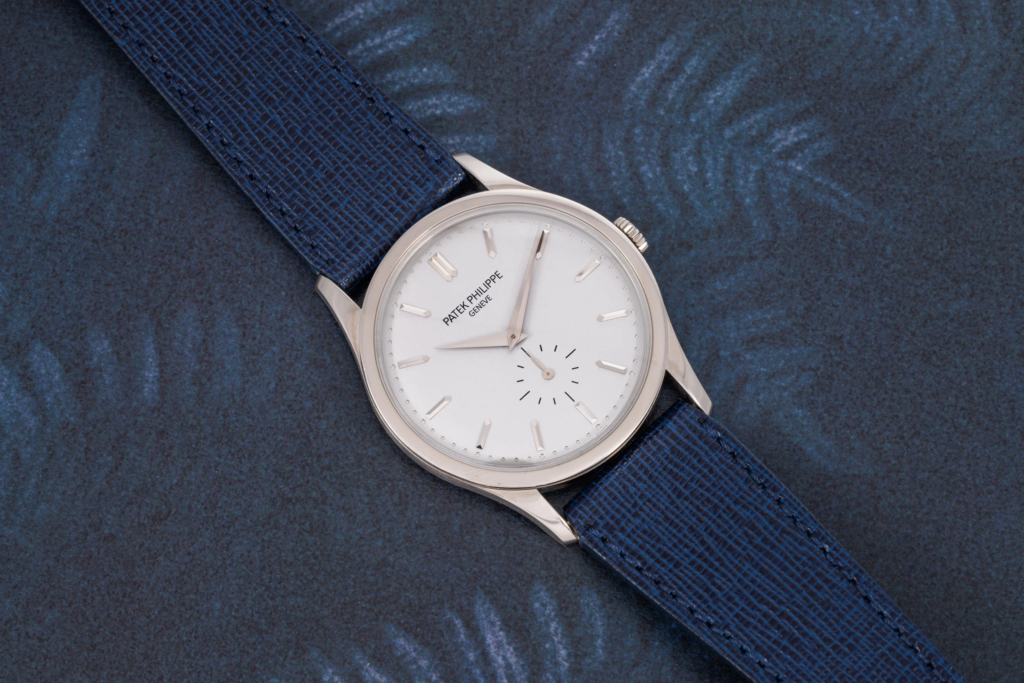
Take the Patek Philippe Calatrava 5196.
To the average eye, it is “just a dress watch.”
But what powers it is a manually wound caliber that descends from a lineage of movements designed to represent the essence of Genevan watchmaking. The complexity is not in complications but in the way every element is refined. It is a meditation in steel and gold, dressed as a watch you might miss in a crowd; unless you know.
Minimalism also gives birth to some of the most innovative engineering solutions. Micro-rotors, ultra-thin calibers, and even exotic escapements often make their home in minimalist cases.
Why?
Because these designs must deliver maximum impact without the aid of busy dial work. A Piaget Altiplano, for instance, looks serene, its dial almost blank. But the engineering required to make the world’s thinnest mechanical movement is staggering.
The lack of decoration on the dial is not absence. It is a spotlight aimed at the audacity beneath.
Collectors who lean into minimalism often find themselves in a different headspace than those who chase maximalist grand complications. The joy here is quieter, more meditative. It is about understanding restraint as a form of flex. Anyone can buy complexity that screams.
Few have the taste to wear complexity that whispers.
Final Thoughts
Minimalism in horology is not laziness, nor is it compromise.
It is one of the hardest tricks in the book. To make a watch that looks like almost nothing, but feels like almost everything, requires engineering brilliance and artistic maturity of the highest order. It is the silence that makes the music, the blank space that makes the art, the pause that makes the sentence resonate.
So next time you see a clean two-hand dial, resist the urge to dismiss it as “basic.”
More often than not, it is the result of some of the most sophisticated thinking in the watch world. And if you really want to show your chops as a collector, remember this: in watches, as in life, the loudest flex is often the quietest one.